| |

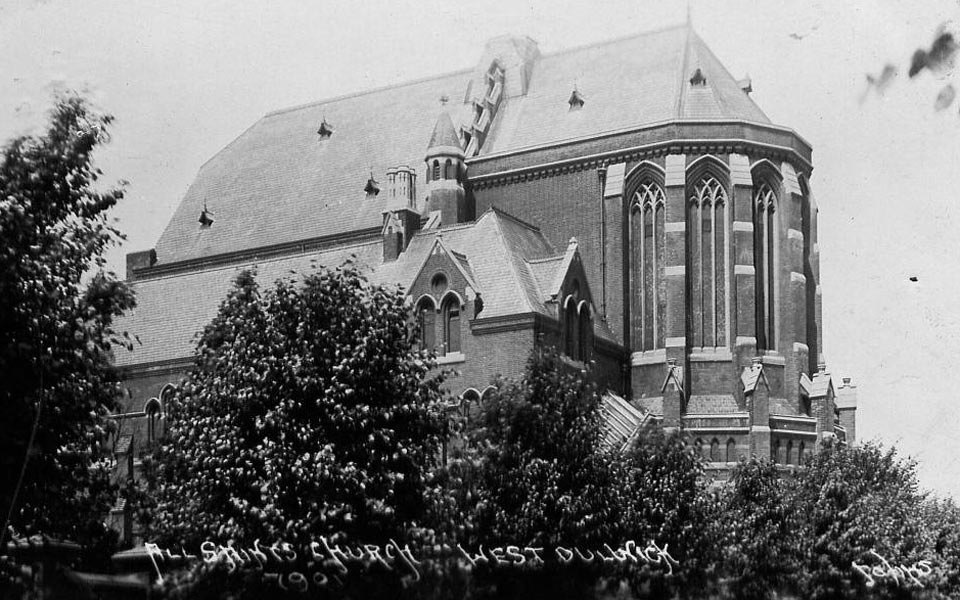
A typical red-brick “town” church, with a number of expected Fellowes Prynne
features (including the tower not having been completed!). A description of the
building appeared in the Whitstable Times in 1925, from which the following
extracts are quoted.
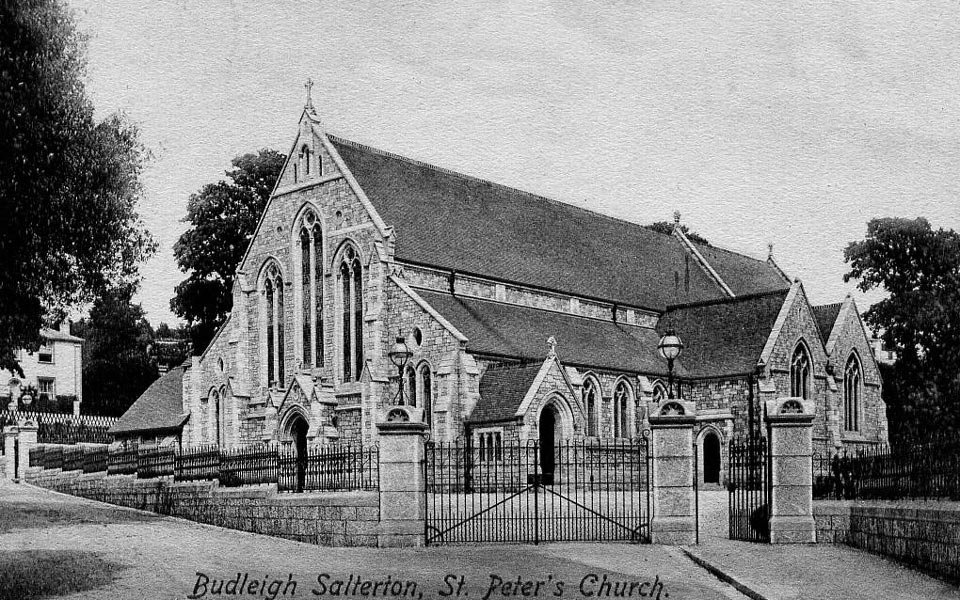
The completed church is a building of much character and dignity.
Outwardly it presents a bold appearance, and a sense of strength is given by its
lines of construction, by the courses of stone in the brickwork, and also by the
long, narrow lancet windows with their setting in stone. The high pitched red
tile roof is a great feature in the building, and a singularly attractive and
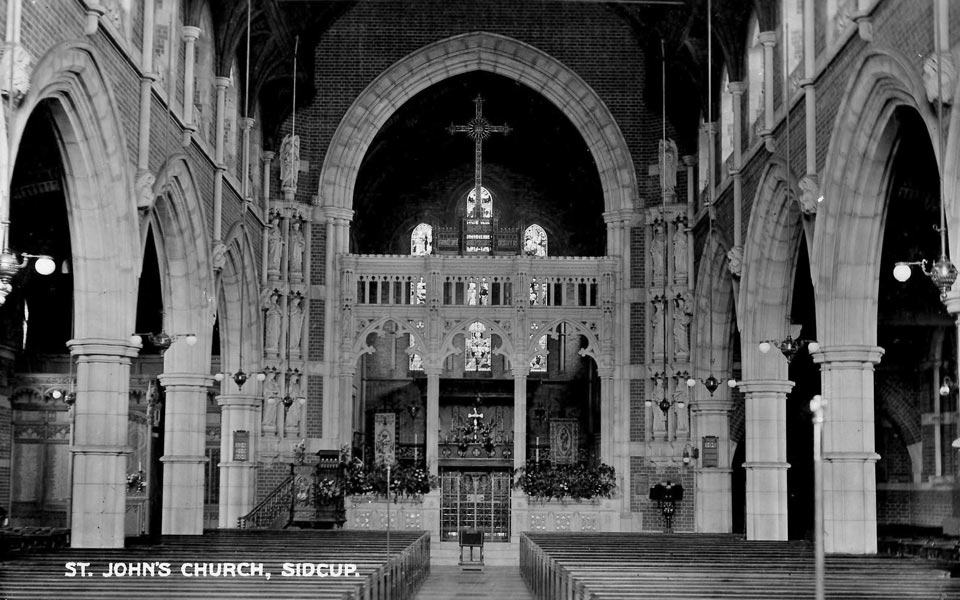
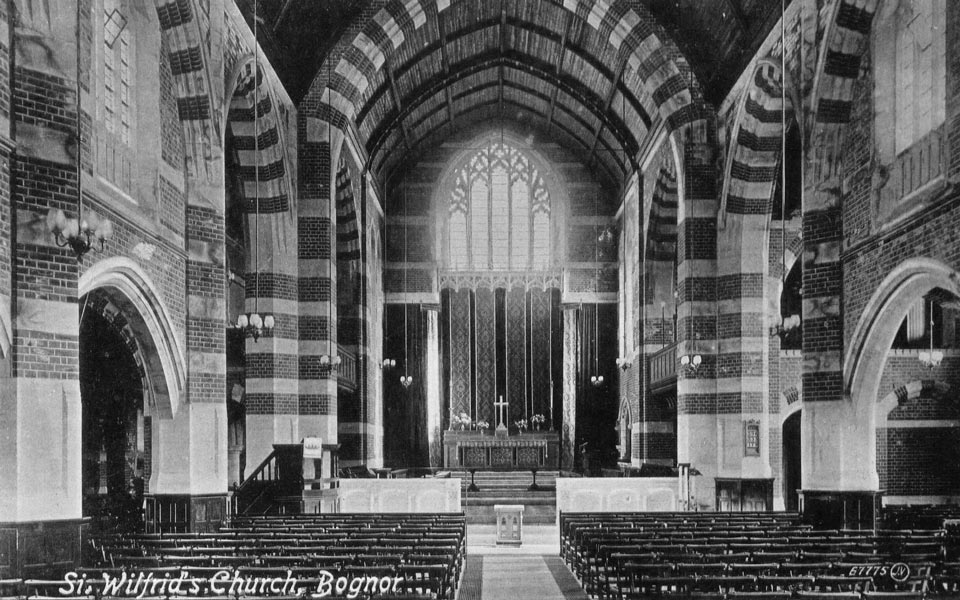
beautiful piece of work… The interior of the building consists of a long Nave
with two Aisles, or Aisle passages. The Nave is divided from the Aisles by five
16 foot red brick circular arches on either side, with bands of stone at
intervals. The combination of arches and Aisles, with the added effect of the
lancet windows, is very striking. The whole building gives the impression of
space. In addition to the Nave and Aisles, to Transepts have been added. These
transepts add greatly to the Eastern end of the Nave, and also to the two
chapels on either side of the Chancel. The whole church is arresting, both by
its entire unity, and also by the striking way in which it breaks into, and is
relieved by, its component parts…
The piers sustaining the arches are cased in a framework of wood. The
interior of the roof is wood, with a barrel shaped ceiling, ending in a strong
dental wall plate.
An interesting feature is added to the Church, by the Western end of the
Nave floor being slightly higher than the Eastern. This enables those at the end
of the Church to see over the heads of those in front, and also produces a
special effect on the building as a whole.
There is some interesting correspondence regarding the arches. In a letter to
the Rev. Hyla Holden, the incumbent at the time, Fellowes Prynne wrote on 6
March 1923:
Now with regard to the Church, I will certainly instruct my Quantity
Surveyor to proceed as soon as possible with the Quantities, and as I should be
extremely sorry to leave out the insertion of stone in the Arches, as it would
spoil the whole character of the interior treatment, I propose getting out
alternative estimates with and without, as the difference I am sure will not be
great. Red brick work carried out without relief in such a position always gives
a heavy appearance and a cheap and chapel-like effect, in a comparatively small
building, which I would like to avoid at all costs.
It would appear the Fellowes Prynne had originally intended a larger
building, with the chancel and sanctuary farther back, a longer nave and a
number of side chapels. This was adapted to the existing more suitable scale,
and, apart from the missing tower, the church was built to his adapted plans.
The illustration shows the architect's original conception of the exterior. |